
Exterior Painting
Exterior painting built for Southern Utah sun: pressure washing, stucco crack repair, and acrylic or elastomeric systems applied in the right window.
01 / Exterior Painting
What desert sun does to paint
Southern Utah is a brutal climate for coatings: intense UV breaks down resins, hundred-degree summers bake walls, and winter nights swing far enough below freezing to work every hairline crack. South- and west-facing walls take the worst of it and fail first, chalking and fading while the north side still looks fresh. Exterior painting here is not decoration, it is the sacrificial layer protecting your stucco and trim from the desert. Choosing coatings rated for that exposure is the difference between a repaint cycle and a repair cycle.
02 / Exterior Painting
How we paint exteriors
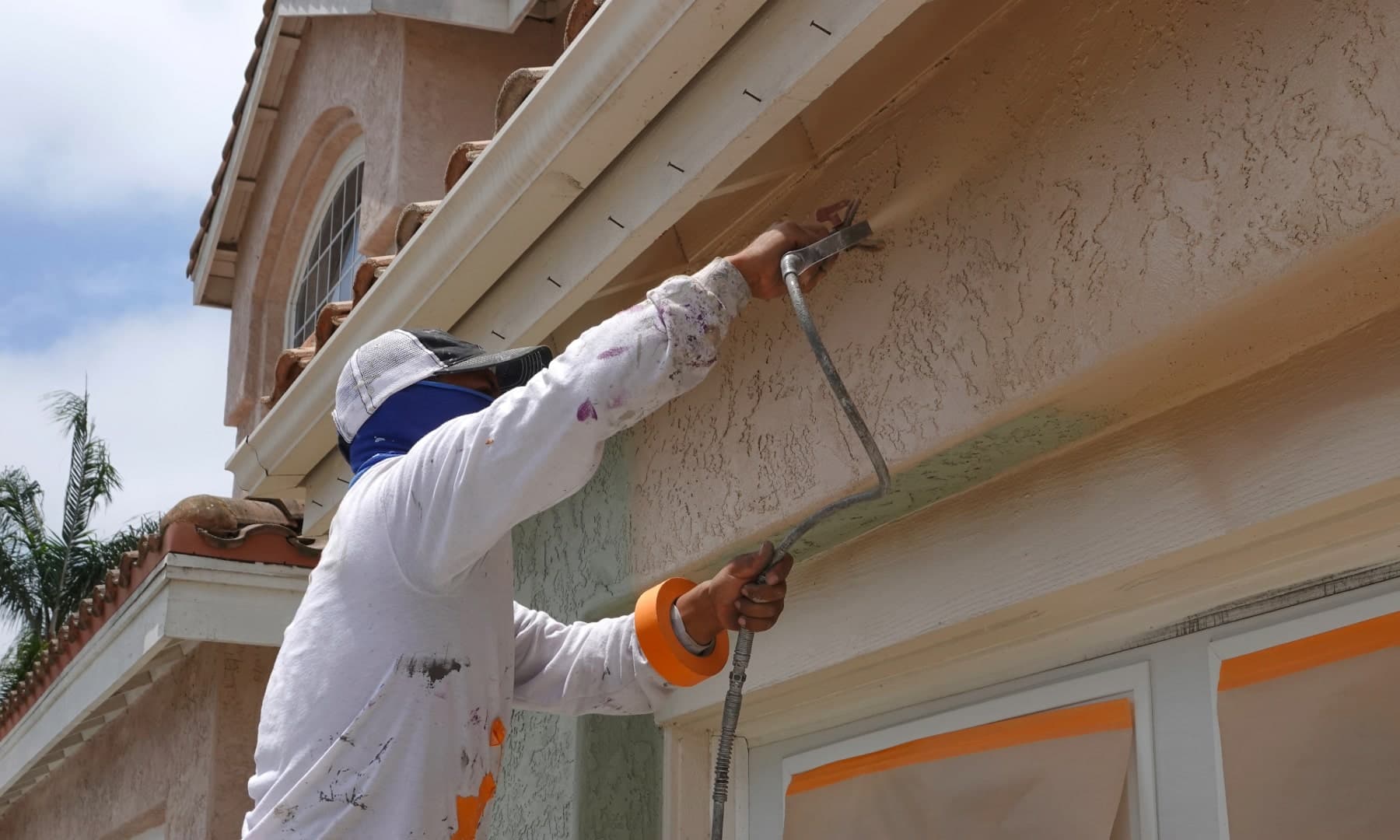
Preparation carries the job: pressure wash to strip chalk and dust, stucco cracks repaired before paint hides them badly, failing caulk cut out and replaced, raw or repaired spots primed, and everything not being painted masked properly. On stucco we spray and back-roll so the coating gets worked into the texture rather than bridging over it. We follow the shade around the house, because paint applied to a sun-baked wall dries before it can bond, and we respect temperature windows at both ends of the season.
03 / Exterior Painting
When it is time to repaint
Run a hand across the wall: chalk on your palm means the coating is oxidizing and has little left to give. Visible fading between shaded and exposed walls, hairline cracking in the paint film, peeling near sprinkler lines, and caulk pulling away from windows are the other flags. Repainting at that stage is maintenance; waiting until stucco is exposed and cracking turns it into repair plus paint. On the desert's schedule, the walls tell you when, and the south side speaks first.
04 / Questions
Exterior Painting FAQ.
Should stucco be painted with elastomeric or regular acrylic paint?
Elastomeric coatings are thick and flexible, so they bridge hairline cracking and shed water aggressively, but they can trap moisture on walls that need to breathe and are hard to reverse. Quality 100 percent acrylic masonry paint breathes better and recoats easily. The right call depends on the condition of your stucco and its cracking history, a wall-by-wall assessment rather than a blanket rule.
What time of year is best for exterior painting in St. George?
Spring and fall give the widest windows: mild temperatures, low humidity, and walls that are not baking. Summer work is possible by chasing shade around the house and starting early, since paint applied to a scorching wall flashes off before it bonds. Winter is workable on many days but limited by cold nights, because most coatings need to cure above their minimum temperature.
Do you repair stucco cracks before painting?
Always, and it is the step that separates a repaint from a quick coat. Paint alone will not hold a moving crack closed; it reopens and telegraphs through the new finish within a season or two. Cracks get routed, filled, and textured to match before any color goes on, so the finished wall is repaired underneath, not just recolored.
Need exterior painting done right?
We respond within one business day with a site walk, a sample, or a line-item estimate.